
Categories
Buying a Home, Homeownership, Real EstatePublished June 26, 2026
Renting vs. Buying: What Makes the Most Financial Sense Right Now?

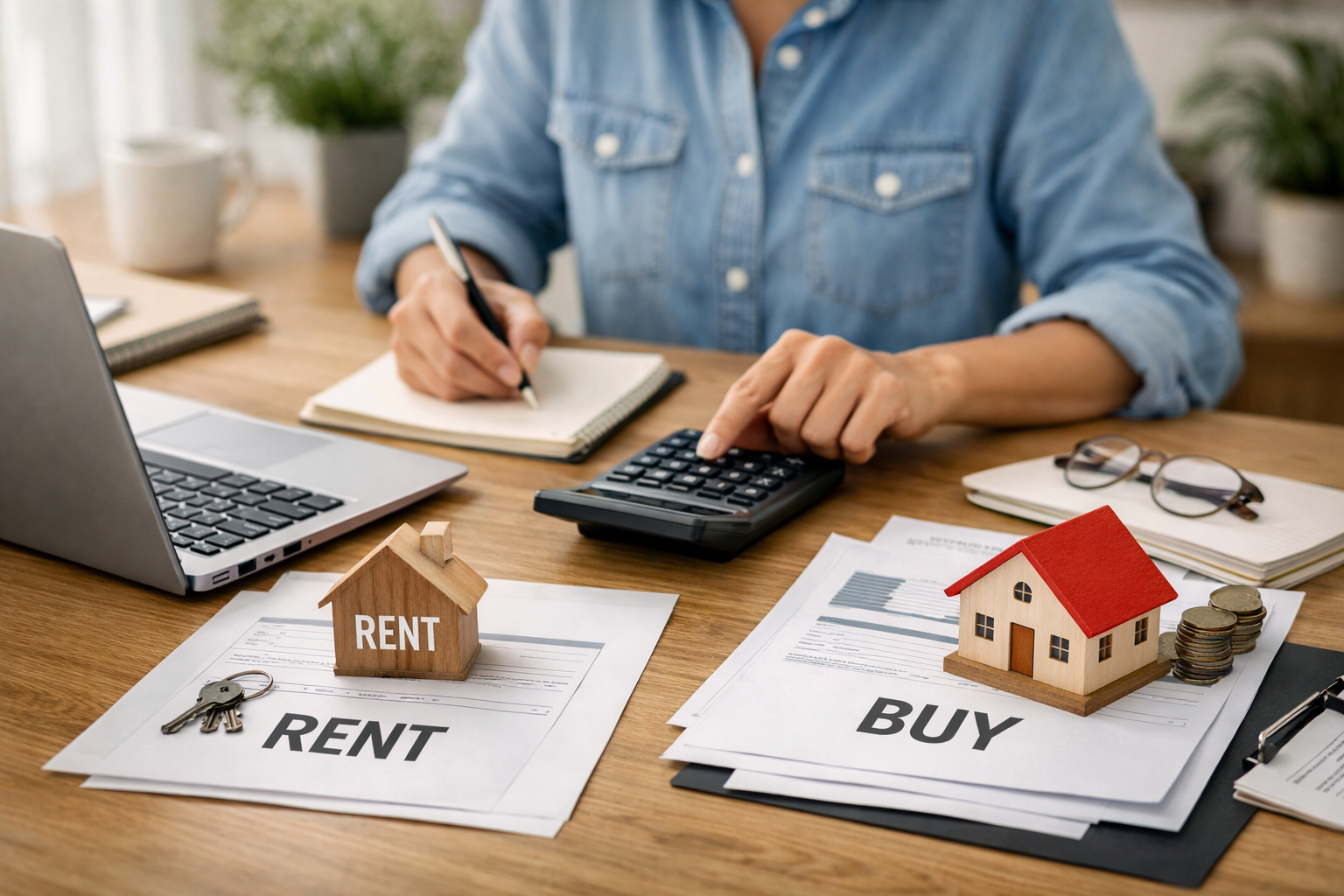
Renting vs. Buying: What Makes the Most Financial Sense Right Now?
If you are trying to decide whether to keep renting or make the jump into homeownership, you are not alone. It is one of the biggest financial questions many people are asking right now, especially in a market where interest rates, home prices, and rent costs have all been part of the conversation.
The answer is not the same for everyone. For some people, buying offers long term financial benefits and more stability. For others, renting still makes more sense based on flexibility, cash flow, or timing. The key is understanding the tradeoffs clearly so you can make the right decision for your situation.
Start With the Monthly Payment, But Do Not Stop There
One of the most common mistakes people make is comparing rent to only the mortgage portion of a home payment. Owning a home usually includes principal, interest, property taxes, homeowners insurance, maintenance, and sometimes HOA dues.
That means a true rent vs. buy comparison should ask:
- What is my all in monthly housing cost if I buy?
- How does that compare to my rent today?
- How likely is my rent to increase over the next few years?
- Would I be comfortable with the difference?
In some cases, buying may cost more per month at first. But that does not automatically make it the wrong choice. Part of your payment may build equity over time, and fixed rate mortgages can create more predictability than rent that increases year after year.
Buying Can Build Equity Over Time
One of the strongest financial arguments for buying is the opportunity to build equity. With each mortgage payment, a portion may go toward the principal balance, which helps increase your ownership stake in the property over time.
That is very different from rent, which pays for housing but does not create ownership. If you plan to stay in the same home for several years, buying can become a powerful way to build long term wealth while also giving you a place to live.
Of course, equity growth is not instant and usually works best over time. That is why buying tends to make the most financial sense for people who expect to stay put long enough to spread out their upfront costs and benefit from longer term ownership.
Renting Still Has Real Advantages
Renting is not “throwing money away.” You are paying for flexibility, lower responsibility, and often lower upfront costs. For many people, that is exactly what they need right now.
Renting may make more sense if you:
- Expect to move within the next couple of years
- Need to keep more cash available for other goals
- Are still building savings or improving credit
- Do not want to handle repairs and maintenance
- Value short term flexibility more than long term ownership
There is nothing wrong with renting when it aligns with your stage of life and financial priorities. The smartest decision is not the one that sounds best online. It is the one that fits your reality.
Think About Upfront Costs
Buying a home usually requires more cash upfront than renting. Depending on the loan type and purchase details, buyers may need funds for a down payment, closing costs, inspections, earnest money, and moving expenses.
That does not mean you need a huge down payment in every case, but you do need a plan. If buying would drain your savings completely, it may be wise to wait until you have a stronger financial cushion.
Healthy homeownership starts with preparation. Ideally, you want enough saved not only to buy, but also to handle the normal surprises that come with owning a home.
Stability Has Financial Value Too
Not every part of this decision fits neatly into a spreadsheet. Buying often offers stability that matters both emotionally and financially. A fixed mortgage payment can make budgeting easier. You may have more freedom to personalize the home. You may also avoid the uncertainty of lease renewals, rent hikes, or needing to move because the property owner has other plans.
That kind of stability can be especially valuable for buyers who want to put down roots, stay in a specific school district, or create a more predictable long term plan.
Renting, on the other hand, can provide freedom in a different way. If your career, relationship status, or future plans are still in flux, the ability to move more easily may be worth a lot.
The Break Even Question Matters
One of the best ways to think about renting versus buying is to ask how long you plan to stay. Buying often makes more sense financially when you are likely to remain in the home for several years. That gives you more time to benefit from equity growth and potentially offset upfront costs.
If there is a strong chance you will relocate in the near future, renting may be the safer financial move. Timing matters just as much as price.
So What Makes the Most Financial Sense Right Now?
The best answer comes down to four things:
- Your monthly comfort level
- Your savings and upfront readiness
- Your expected timeline in the home
- Your need for flexibility versus stability
If you have stable income, enough savings, and a plan to stay in the home for several years, buying may be the stronger long term financial choice. If you need flexibility, want lower responsibility, or are still getting your finances in place, renting may still be the smarter move for now.
There is no universal right answer. There is only the right answer for your goals, your budget, and your next season of life.
The most helpful next step is to compare real numbers side by side. Once you know what buying would actually look like in your market and payment range, the decision usually becomes much clearer.

Rutledge Property Group
Real Estate Team | Rutledge Property Group | Brokered by EXP Realty
or another way